Strength training for women over 40: why it matters and how to start
Muscle starts to decline as women enter the menopause transition, and strength training is the most direct way to protect it. It also supports bone, joints and everyday function, and it is never too late to begin.
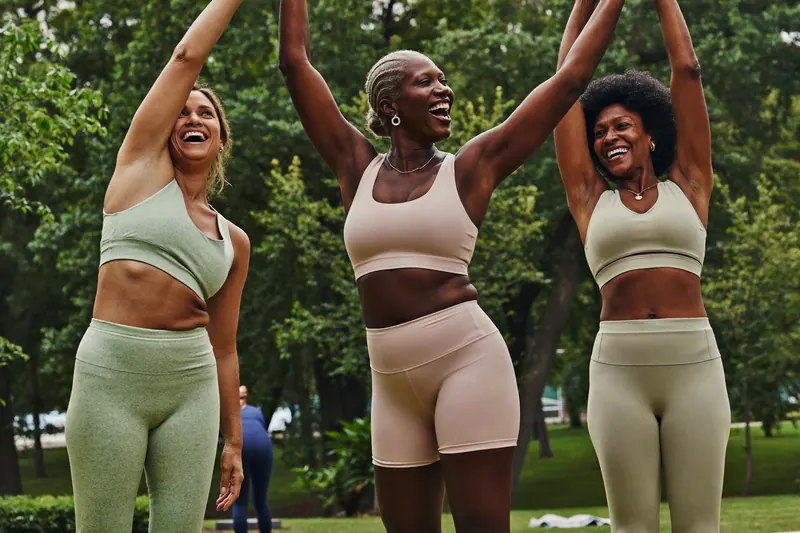
Talk to a doctor or physical therapist first if you have osteoporosis or a past fracture, a heart condition, uncontrolled high blood pressure, pelvic floor problems, or a recent joint injury or surgery.
Why strength matters from your 40s
A long US study followed 1,246 women through menopause. Lean mass began to fall at the start of the transition, while fat gain roughly doubled.1 These changes leveled off about two years after the final period.1 Total weight did not always change, because muscle loss offset fat gain.1
This is why perimenopause, often in your 40s, is a good time to start. Strength training helps keep muscle and strength as you age, and it may help protect bone.3
WHO advises muscle-strengthening activity that works all major muscle groups on two or more days a week.2 The International Menopause Society gives the same advice for women in menopause.9
What the research shows
A 2022 review of 12 trials in postmenopausal women found resistance training improved everyday physical function and bone density modestly, and reduced body fat.4 Waist size did not change. Evidence certainty was low to very low.4
For bone, the LIFTMOR trial gave 101 women with low bone mass supervised, high-intensity strength and impact training twice a week for eight months.5 Spine bone density rose 2.9%, while it fell 1.2% in the low-intensity group. Only one minor back spasm was reported.5 This was closely supervised training, so it is not a home program to copy.
For hot flashes, a Swedish trial gave 58 women 15 weeks of strength training.7 Daily hot flashes and night sweats fell from about 7.5 to 4.4, with little change in the control group.7 The 2022 review also found fewer hot flashes with resistance training.4 This is promising, but the trials are small.
For knee arthritis, a Cochrane review of 54 trials found exercise programs reduced pain and improved function, at least in the short term.8
For a fuller look at the evidence, see our treatment page on exercise and strength training.
How to start
You do not need a gym. Body weight, resistance bands, dumbbells, household items or machines all work.3
- Warm up first with a few minutes of brisk walking or marching on the spot.3
- Begin with simple moves such as sit-to-stands from a chair, wall push-ups, step-ups and band rows.
- Choose a load that tires your muscles in about 12 to 15 repetitions, and make it harder once it feels easy.3
- Aim to work each major muscle group at least twice a week, with a rest day between sessions for the same muscles.3
- Good form matters more than heavy weight. A trainer or physical therapist can check your technique.3
- Stop any exercise that causes pain, and try a lighter weight later.3
If you have osteoporosis, strength training is still recommended. UK experts advise building up gradually, learning safe lifting, and avoiding movements with a lot of forward bending of the spine.6 If you have had a spinal fracture, get physical therapy advice first and focus on posture and back-strengthening exercises.6
If you have joint pain, start with lighter loads and a smaller range of movement. Seated or water-based exercise can be easier on sore joints.
Do you have a heart condition, diabetes, high blood pressure or another health problem? Have you been inactive for a long time? If so, check with your doctor before you start.10 Stop and get urgent help if you have chest pain, dizziness or a racing heartbeat. The same applies to breathlessness that does not settle with rest.10
Pelvic floor problems become more common around menopause.11 If you have leaking or prolapse, heavy lifting and high-intensity work may need changing. A pelvic floor physical therapist or a qualified trainer can help.11
Pregnancy is still possible in perimenopause, until periods have stopped for 12 months.12 If you are or might be pregnant, ask your doctor or midwife which activities suit you.
Keeping it going
Progress slowly and expect some muscle soreness in the first few weeks. Two short sessions a week is a realistic goal for most beginners.3
Strength training works best alongside aerobic activity. The International Menopause Society says combining both gives the greatest overall benefit.9 See walking and running for ideas.
What it is used for: evidence rated
| Option | Evidence | What the research shows |
|---|---|---|
| Muscle strength and everyday function | WHO recommends muscle-strengthening for all adults; trials in postmenopausal women show better physical function.2,4 | |
| Bone strength | One well-run trial in women with low bone mass found supervised high-intensity training raised spine bone density; reviews show modest gains.5,4 | |
| Joint pain (knee arthritis) | Exercise reduces knee arthritis pain and improves function, though this evidence is not specific to menopause.8 | |
| Weight around the middle | Resistance training reduced body fat in a review of trials, but waist size did not change.4 | |
| Hot flashes | A small trial and a review of low-certainty trials found fewer hot flashes, but larger trials are needed.7,4 |
Ratings explained: how we rate. Always talk to a doctor or pharmacist before starting a medicine or supplement.
Related
Products to explore
Sources
- The effect of menopause on body composition (SWAN study, JCI Insight 2019), Contemporary OB/GYN
- Physical activity fact sheet, World Health Organization Europe
- Strength training: get stronger, leaner, healthier, Mayo Clinic
- Resistance training for postmenopausal women: systematic review and meta-analysis (Sá et al.), Menopause (2022)
- High-intensity resistance and impact training improves bone mineral density in postmenopausal women with low bone mass: the LIFTMOR RCT, J Bone Miner Res (2018)
- Strong, steady and straight: UK consensus statement on physical activity and exercise for osteoporosis, BJSM blog (2023)
- Strength training may reduce hot flushes in postmenopausal women (Maturitas trial, 58 women), Medical Dialogues (2019)
- Exercise for osteoarthritis of the knee (Fransen et al., Cochrane 2015), McMaster Optimal Aging summary
- Physical activity and menopause, World Menopause Day factsheet, International Menopause Society (2025)
- How to get the exercise you need, CardioSmart, American College of Cardiology
- What are pelvic floor safe exercises? Pelvic Floor First, Continence Foundation of Australia
- Can you get pregnant during perimenopause? University Hospitals (2025)